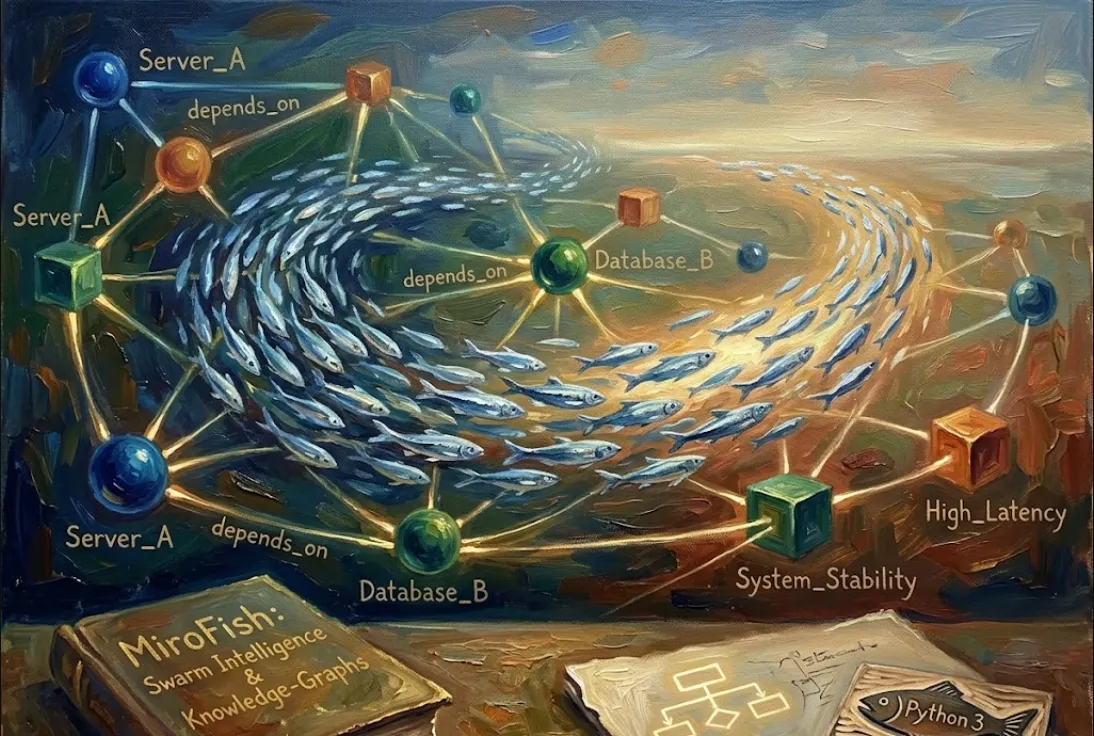
The BettaFish Project: A Software Engineer’s Guide to Multi-Agent Sentiment Intelligence

The 666ghj/BettaFish project, described as a multi-agent public opinion analysis assistant ("微舆," or Micro-Opinion), is highly relevant for software engineers working on systems that require advanced Natural Language Processing (NLP) and data-driven decision-making. Since the project description mentions it's built from scratch without relying on frameworks and focuses on sentiment analysis, its primary value lies in these areas
Deep NLP/Sentiment Expertise
It offers an opportunity to understand and implement sentiment analysis and complex public opinion modeling using pure Python. This is essential for engineers who need to build custom, low-level text analysis tools or integrate sentiment scoring into larger applications (e.g., product feedback analysis, brand monitoring).
Multi-Agent System Architecture
The "multi-agent" approach is a cutting-edge architectural pattern. For an engineer, this provides a blueprint for designing modular, collaborative systems where specialized "agents" (like a data collector, a sentiment analyzer, and a report generator) work together. This is a powerful concept for complex, multi-step workflows.
Framework-Agnostic Development
The decision to build it from scratch means the resulting code base is a great learning resource for core Python programming and NLP algorithm implementation without the abstraction of high-level libraries. This can lead to highly efficient, domain-specific tools.
Real-time Decision Support
By aiming to "predict future trends" and "assist in decision-making," the project addresses a critical business need. Engineers can learn how to bridge raw data analysis (sentiment scores) with actionable insights (reports, predictions) for business intelligence systems.
The repository is tagged with python3, nlp, and sentiment-analysis, meaning deployment would follow a standard Python project setup.
You'll typically need to ensure your environment has the following
Python 3.x
The core language.
NLP Libraries
Even though the core is "from scratch," you'll likely use essential libraries for tokenization, word vectors, or data handling, like NLTK, spaCy, or Pandas.
Since it's on GitHub, the usual first step is to clone the repository
# Clone the repository
git clone https://github.com/666ghj/BettaFish.git
cd BettaFish

# Create and activate a virtual environment (recommended practice)
python3 -m venv venv
source venv/bin/activate  # On Windows, use 'venv\Scripts\activate'

# Install any required dependencies (if a requirements.txt exists)
# pip install -r requirements.txt
The core functionality would involve running a main script that orchestrates the agents.
# Conceptual command to start the public opinion analysis assistant
python3 main_agent_orchestrator.py --topic "Your Product Launch" --platform "Twitter"
As a software engineer, you'd be interested in the Sentiment Agent—one of the key components of the multi-agent system. Here is a simplified, conceptual example of what a function within that agent might look like using a common Python NLP library for demonstration
# Conceptual Sample Code (Illustrates the Sentiment Agent's role)
import nltk
from nltk.sentiment.vader import SentimentIntensityAnalyzer

# Ensure VADER lexicon is downloaded (run once)
# nltk.download('vader_lexicon')

def analyze_sentiment(text_input: str) -> dict:
    """
    Analyzes the sentiment of a piece of text and returns a compound score.
    In the BettaFish project, this function would likely be a custom implementation
    to avoid reliance on VADER, but the *function* of the Agent is the same.
    """
    # Initialize the sentiment analyzer
    analyzer = SentimentIntensityAnalyzer()

    # Get the raw sentiment scores
    score = analyzer.polarity_scores(text_input)

    # Classify the overall sentiment based on the compound score
    compound_score = score['compound']

    if compound_score >= 0.05:
        sentiment = "Positive"
    elif compound_score <= -0.05:
        sentiment = "Negative"
    else:
        sentiment = "Neutral"

    return {
        "text": text_input,
        "sentiment_label": sentiment,
        "compound_score": compound_score
    }

# --- Example Usage ---
opinion_text_1 = "This new product is absolutely revolutionary and a game changer!"
opinion_text_2 = "The service was slow, and I experienced several frustrating bugs."

print(f"Opinion 1 Analysis: {analyze_sentiment(opinion_text_1)}")
print(f"Opinion 2 Analysis: {analyze_sentiment(opinion_text_2)}")

# Output would be similar to:
# Opinion 1 Analysis: {'text': '...', 'sentiment_label': 'Positive', 'compound_score': 0.8516}
# Opinion 2 Analysis: {'text': '...', 'sentiment_label': 'Negative', 'compound_score': -0.7351}
This conceptual code demonstrates how a single agent (the Sentiment Agent) receives data from another agent (like a Data Collection Agent) and provides its analysis for a downstream agent (like a Report Generation Agent) to use. This modularity is key to the project's multi-agent design!