From Minutes to Hours: Mastering Multi-Agent Orchestration with Deer-Flow

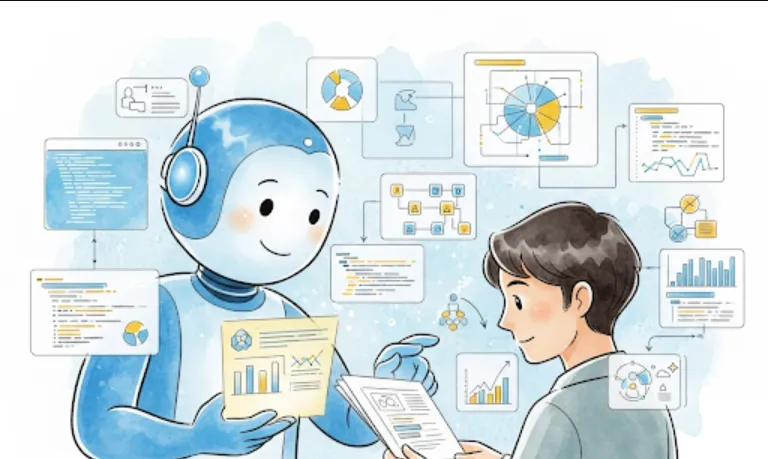
Let’s dive into Deer-Flow by ByteDance. Think of it not just as another chatbot, but as a highly capable digital coworker that can handle the "heavy lifting" of research and coding.
In the world of AI, we often talk about "Agents." Deer-Flow is what we call a SuperAgent Harness.
While a basic agent might just call a single API, Deer-Flow manages a complex ecosystem
Sandboxes
Secure environments to run and test code safely.
Memories
It remembers context across long-running tasks.
Subagents
It can delegate smaller tasks to "specialist" agents.
Multi-language
It plays nicely with both Node.js and Python.
From a developer's perspective, this solves the "context window" and "reliability" problems
Autonomous Research
It doesn't just give you an answer; it can browse the web, verify sources, and synthesize a report.
Code & Execute
It can write code and immediately run it in a sandbox to see if it works, iterating until it passes.
Long-running Tasks
It’s designed for tasks that take 10 minutes to 2 hours—tasks that would usually bore a human to tears.
Since Deer-Flow is open-source, you can self-host it. Here is the general flow to get it running
Ensure you have Node.js (v18+) and Python (3.10+) installed. You'll also need an API key from an LLM provider (like OpenAI or Anthropic).
# Clone the repository
git clone https://github.com/bytedance/deer-flow.git
cd deer-flow

# Install dependencies
npm install  # For the Node.js harness
pip install -r requirements.txt # For the Python logic
Rename the .env.example file to .env and add your API keys
OPENAI_API_KEY=your_key_here
# If using sandboxes (like E2B or Docker)
SANDBOX_API_KEY=your_sandbox_key
Here is a simplified conceptual example of how you might define a task using the Deer-Flow structure.
# python_example.py
from deer_flow import Agent, Task

# Define the agent with specific skills
researcher = Agent(
    role="Senior Research Engineer",
    tools=["web_search", "python_interpreter"],
    memory_enabled=True
)

# Assign a complex task
my_task = Task(
    goal="Research the latest trends in WebAssembly (2026) and write a demo script.",
    output_format="markdown"
)

# Run the flow
result = researcher.execute(my_task)
print(result)
| Feature | Benefit |
| Sandboxing | Safe execution of generated code without messing up your host machine. |
| Subagents | Breaks down a "Mountain" of a task into manageable "Molehills." |
| Cross-Platform | Flexibility to use the Node.js ecosystem or Python's data science libraries. |
If you're building a production-grade tool, pay close attention to the Memory implementation in Deer-Flow. It allows the agent to "learn" from its mistakes during a session, which is crucial for those tasks that take an hour to complete.