Bypassing Refusal Vectors: Automating Model De-Censorship using p-e-w/heretic

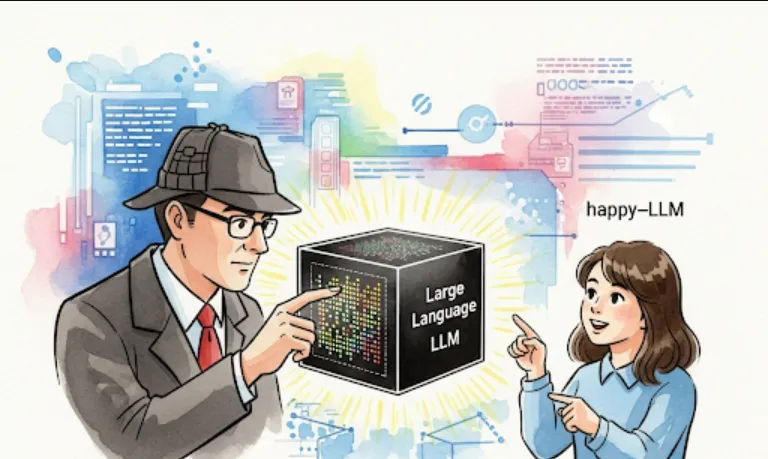
You're looking at Heretic, which is a tool for Abliteration. From a dev's perspective, this is a fascinating way to modify model behavior without the massive overhead of retraining.
In the world of LLMs, "censorship" or safety tuning is often represented by specific refusal vectors within the model's residual stream. Think of it like a specific neural pathway that says, "If the prompt looks sensitive, trigger the 'I cannot assist with that' response."
Abliteration (a mix of ablation and obliteration) identifies these specific directions in the high-dimensional space and mathematically "zeroes them out" or shifts them. Instead of teaching the model new things, you're essentially performing surgical removal of the refusal mechanism.
Zero Training Cost
You don't need a massive GPU cluster for fine-tuning.
Precision
You aren't changing the model's core knowledge, just its "willingness" to talk.
Research
It’s an incredible way to study how safety alignment is actually stored in a model's weights.
The p-e-w/heretic library simplifies this process into a pipeline. Usually, you'd have to manually find the "refusal vector" by comparing harmless vs. harmful prompts, but this tool automates that hunt.
You’ll need a Python environment with torch and transformers.
pip install torch transformers accelerate
git clone https://github.com/p-e-w/heretic
cd heretic
pip install -r requirements.txt
The basic logic follows these steps
Load your target model (e.g., Llama-3).
Generate internal activations for "harmful" vs. "harmless" prompts.
Calculate the mean difference to find the "refusal direction."
Project the model's weights to remove that direction.
While heretic provides a CLI, here is the conceptual "under the hood" look at how you might apply a refusal vector shift using the library’s logic
from heretic import Abliterator
from transformers import AutoModelForCausalLM, AutoTokenizer

model_id = "meta-llama/Meta-Llama-3-8B"
tokenizer = AutoTokenizer.from_pretrained(model_id)
model = AutoModelForCausalLM.from_pretrained(model_id, device_map="auto")

# Initialize the abliterator
abliterator = Abliterator(model, tokenizer)

# 1. Find the refusal vector (Heretic automates this via built-in datasets)
refusal_vector = abliterator.calculate_refusal_vector()

# 2. Apply the 'surgery' to the model layers
# This mathematically removes the refusal direction from the weights
abliterator.apply_ablation(refusal_vector, intensity=1.0)

# 3. Save your uncensored model
model.save_pretrained("./llama-3-abliterated")
Abliteration is a powerful tool, but keep in mind that once those guardrails are gone, the model might produce hallucinated or toxic content more easily. It’s like taking the brakes off a car—great for the racetrack, but you’ve got to be extra careful how you steer!